-
Overview
The Business Units section serves as the top level of organizational hierarchy within GSI's Organization module. It provides a structured approach to managing large organizational divisions and their relationships.
Hierarchical Structure
Business Units follow a four-tier organizational hierarchy:
- Business Units (Top level) - Large organizational divisions
- Departments - Functional areas within business units
- Teams - Working groups within departments
- Individuals - Actual company personnel
Interface and Functionality
Main Interface Components
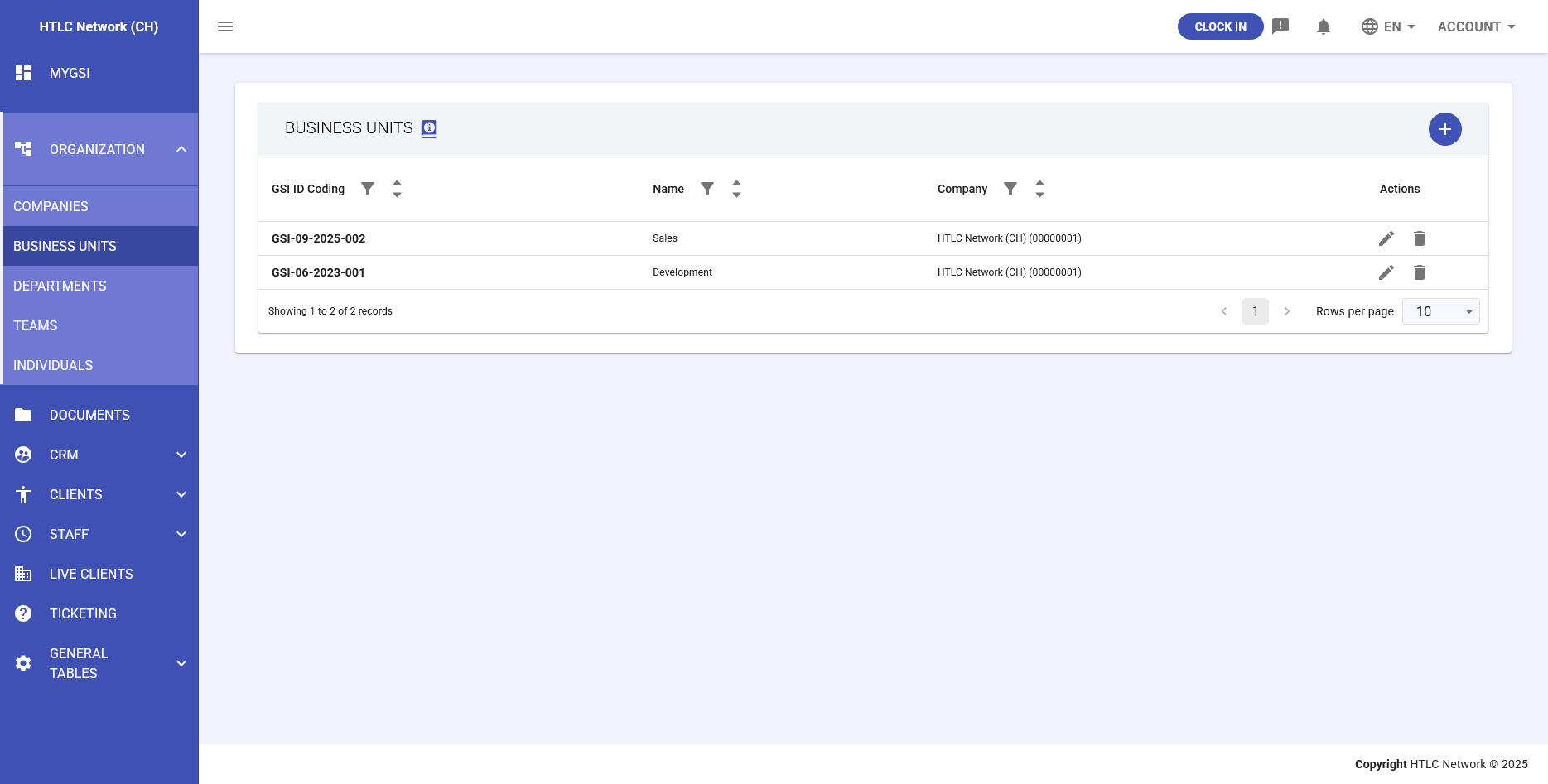
The Business Units interface includes:
- Table view displaying existing business units with columns for:
- GSI ID Coding - Auto-generated identifiers (e.g., "GSI-06-2023-001")
- Name - Descriptive name (e.g., "Development")
- Company - Associated company (e.g., "HTLC Network (CH)")
- Actions - Edit and delete options
- Add New Business Unit functionality via the "+" button
- Pagination controls showing records per page
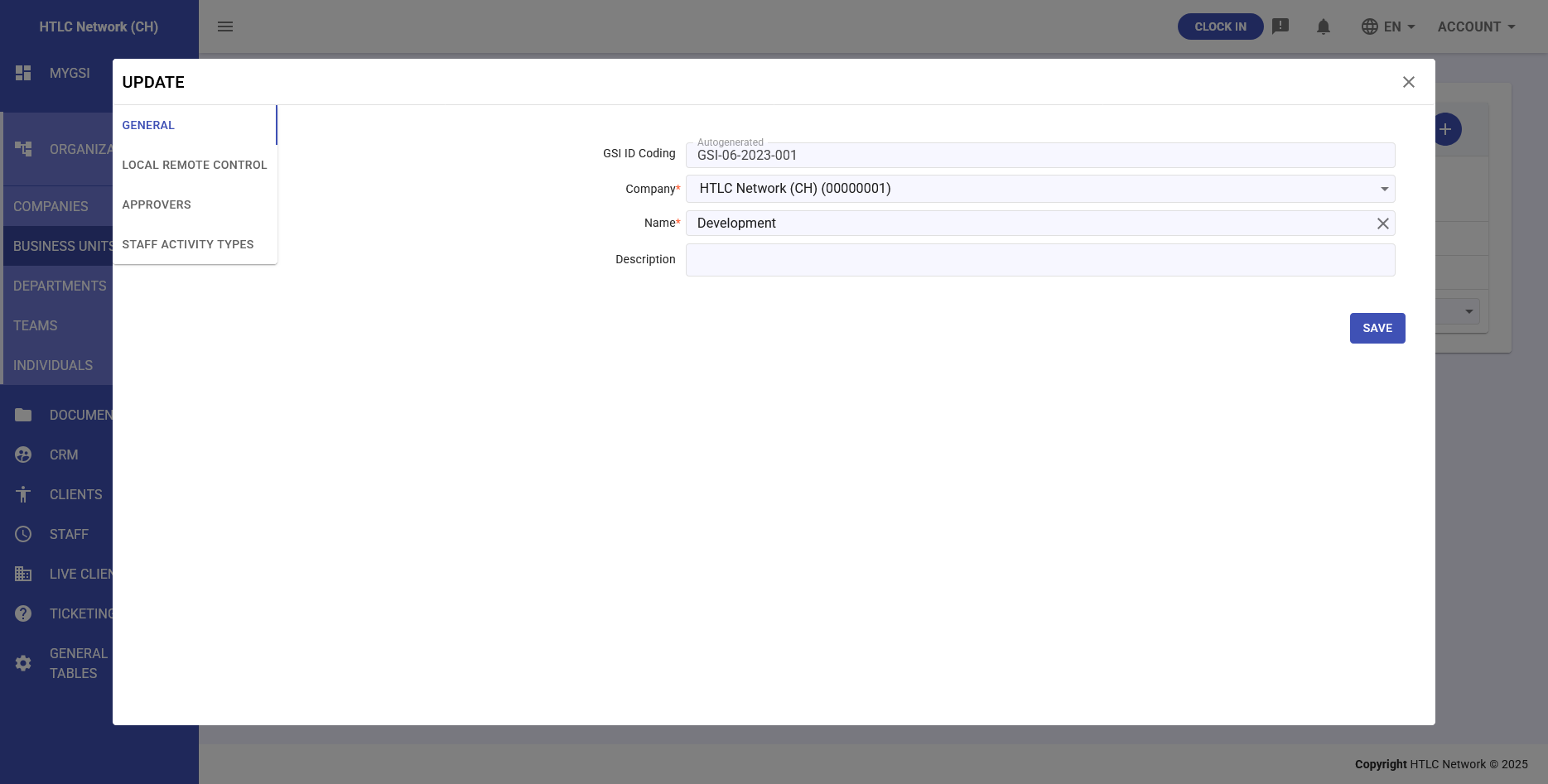
- Action buttons for editing and managing individual business units
Creation Process
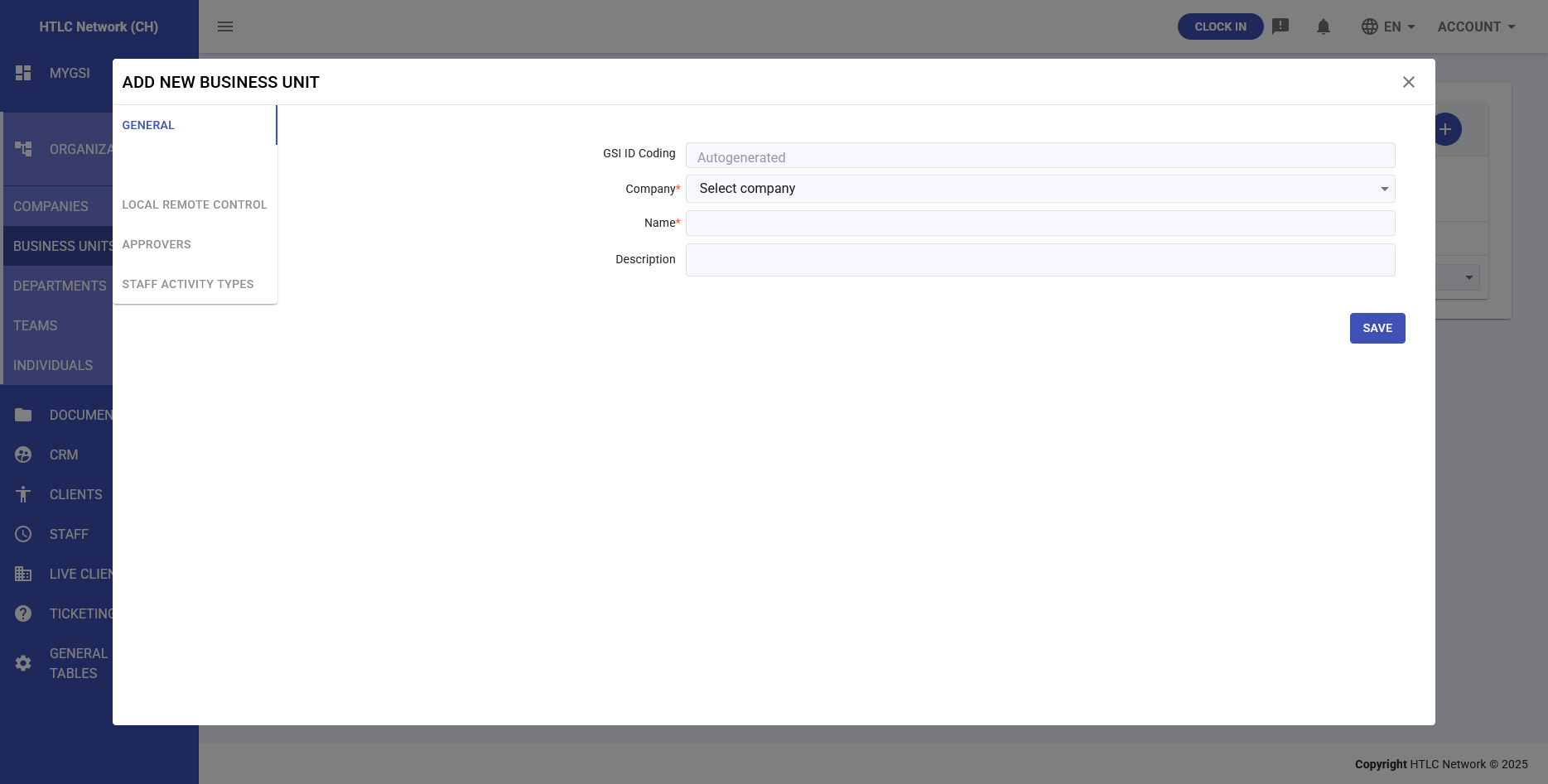
The "Add New Business Unit" dialog includes fields for:
- GSI ID Coding: Auto-generated unique identifier
- Company: Selection from available companies
- Name: Descriptive name for the business unit (required field)
- Description: Optional detailed description
Organizational Benefits
Primary Functions
Business Units act as containers and organizational tools for:
- Approval Workflows
- Structuring approver hierarchies based on organizational divisions
- Enabling department and team-level approval processes
- Staff Activity Types
- Organizing and restricting available activity types by business unit
- Controlling which activities are accessible to specific organizational levels
- Local Remote Control
- Configuring access restrictions and device controls for groups of individuals
- Managing security policies at the business unit level
- Departmental Organization
- Providing logical groupings for departments and their associated teams
- Enabling clear reporting structures and management hierarchies
Integration with Other Modules
System Integration Points
Business Units integrate seamlessly with:
- Individual Management
- Assigning personnel to appropriate organizational levels
- Managing user access based on business unit membership
- Permission Systems
- Role-based access control implementation
- Hierarchical permission inheritance
- Time & Activities
- Activity type restrictions and approvals
- Time tracking organization by business unit
- Companies Module
- Multi-company organizational structures
- Cross-company business unit relationships
Key Features
Flexibility and Scalability
- Optional Implementation: Business Units are marked as "Optional" in the GSI system
- Scalable Structure: Supports both simple and complex organizational models
- Real-world Mirroring: Allows organizations to replicate their actual structure within GSI
Administrative Control
- Precise Permission Control: Enables granular access control at multiple organizational levels
- Workflow Management: Facilitates structured approval processes
- Administrative Efficiency: Reduces complexity in managing large organizations
Best Practices
Implementation Guidelines
- Plan Hierarchy: Design business unit structure to match real organizational divisions
- Consider Workflows: Align business units with existing approval and reporting structures
- Permission Strategy: Use business units to simplify permission management across large groups
- Activity Organization: Leverage business units to control activity type availability
Maintenance Considerations
- Regular review of business unit structure as organization evolves
- Coordination with HR and management for structural changes
- Documentation of business unit purposes and responsibilities
- Training for administrators on hierarchical permission management
Conclusion
The Business Units section provides a powerful organizational framework that enables precise control over permissions, workflows, and administrative processes while maintaining flexibility to handle diverse organizational structures. This hierarchical approach enhances GSI's ability to serve complex multi-departmental organizations effectively.